More than a sake tasting festival, Xin Chào Sake 2026 welcomed over 430 guests aboard a “Sake Train” journey through 14 sake breweries from Japan. Behind every glass was the story of a drink with more than 2,000 years of history, its potential to pair with Vietnamese cuisine, and an ongoing effort to bring sake culture closer to people in Vietnam.
Perhaps the easiest way to begin exploring sake is not by memorising terms such as Junmai, Ginjo or rice polishing ratios.
At Xin Chào Sake 2026, TASU+ chose a more approachable route, turning the discovery of sake into a train journey with 14 stops, each representing a sake brewery from Japan.
More than 430 guests, from sommeliers and bartenders to F&B professionals and young people interested in Japanese culture, came together to taste sake, learn how it is made and discover the stories behind each bottle.
But to describe Xin Chào Sake simply as a tasting festival would not quite capture the whole picture.
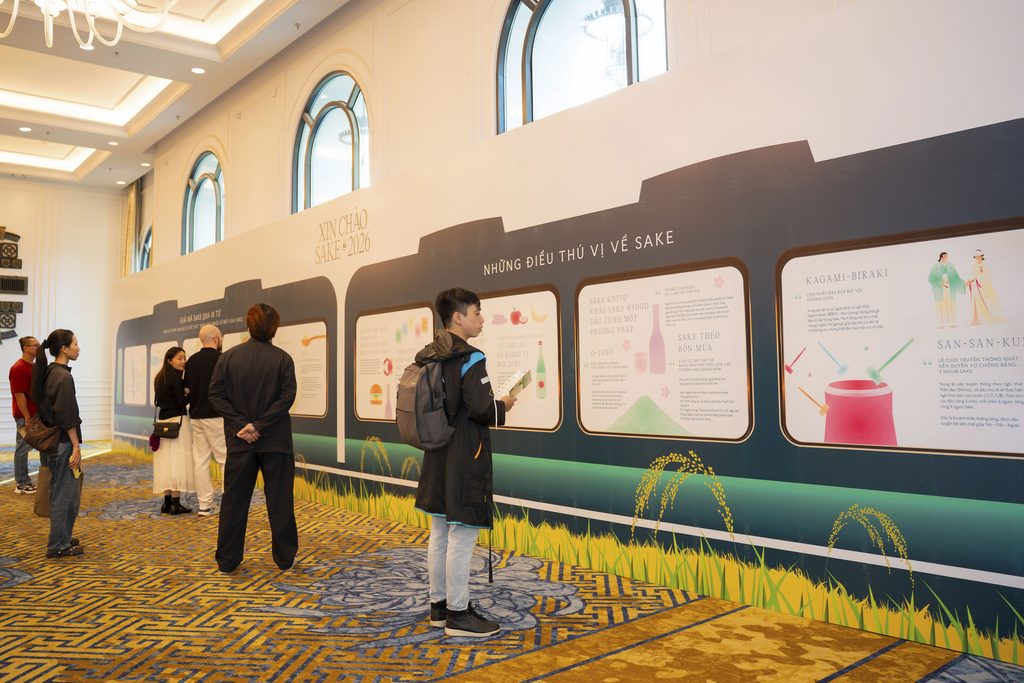
Sake: More Than 2,000 Years of Japanese Culture in a Glass
For the Japanese, sake has long been more than an everyday drink.
Rooted in a rice-brewing tradition that spans around 2,000 years, sake has been closely connected with religious life, Shinto rituals, traditional festivals and family gatherings. In Japanese culture, it was once offered to the gods as a sacred gift, carrying meanings of gratitude, connection and good wishes.
Over the centuries, as brewing techniques evolved, sake developed into a wide range of styles shaped by regional characteristics, ingredients and the accumulated knowledge of generations of brewers.
What makes sake particularly interesting is that it begins with relatively simple ingredients: rice, water, koji and yeast. Yet it is the interaction between those ingredients, fermentation techniques and the skill of the brewer that creates such diversity in flavour.
Behind each bottle, therefore, lies more than a production method. There are stories of water sources, rice varieties, local climate and brewing techniques that have been preserved and refined over generations.
These are also some of the cultural values TASU+ aimed to introduce to guests at Xin Chào Sake 2026.
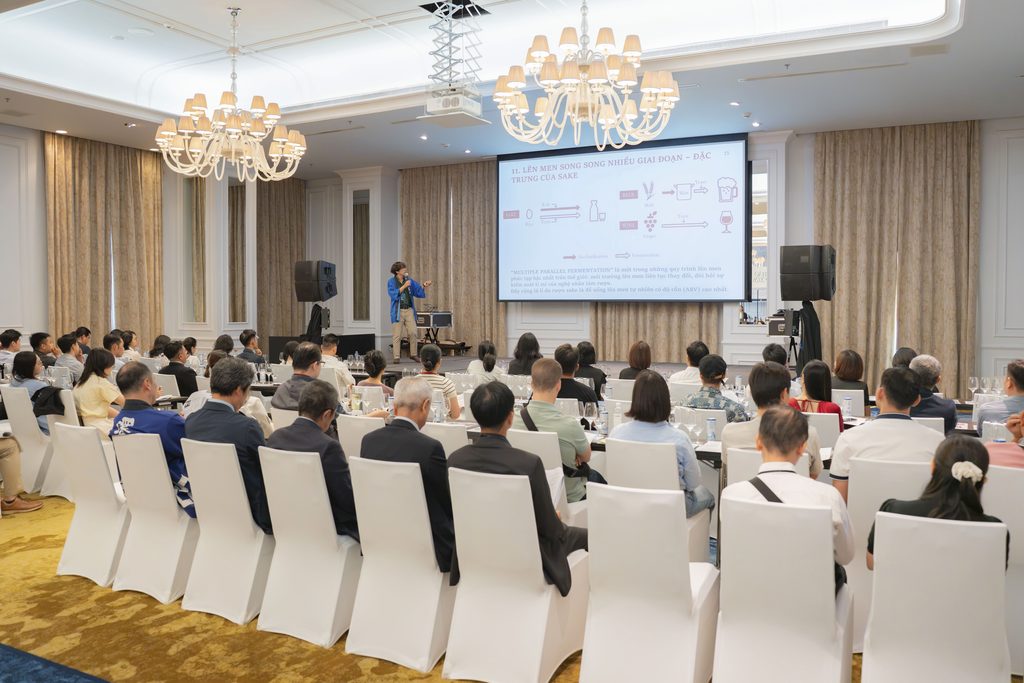
A “Sake Train” Through 14 Japanese Breweries
Bringing that spirit of discovery to Vietnam, Xin Chào Sake 2026 created a journey through 14 sake breweries from Japan, giving guests the opportunity to experience a variety of sake styles within a single event.
At the tasting areas, guests could explore different expressions of sake and experience variations in aroma, texture and flavour. Each tasting also offered an opportunity to learn more about the ingredients, production methods and individual identities of the breweries behind them.
Beyond sake tasting, the programme included educational sessions, guided tastings and the panel discussion The Future of Sake in Vietnam, where industry professionals explored the potential development of sake in the Vietnamese market.
More importantly, the “Sake Train” was not simply about introducing Japanese products. Through flavour, knowledge and interaction between brewers and drinkers, the event became a space connecting Japanese culture with Vietnam’s growing sake community.
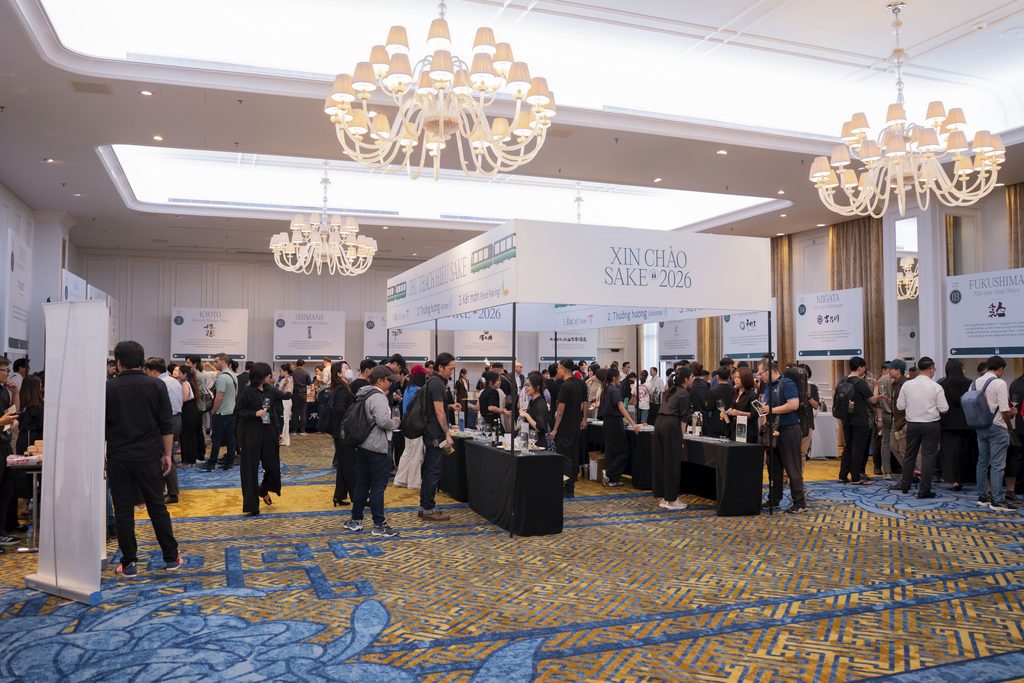
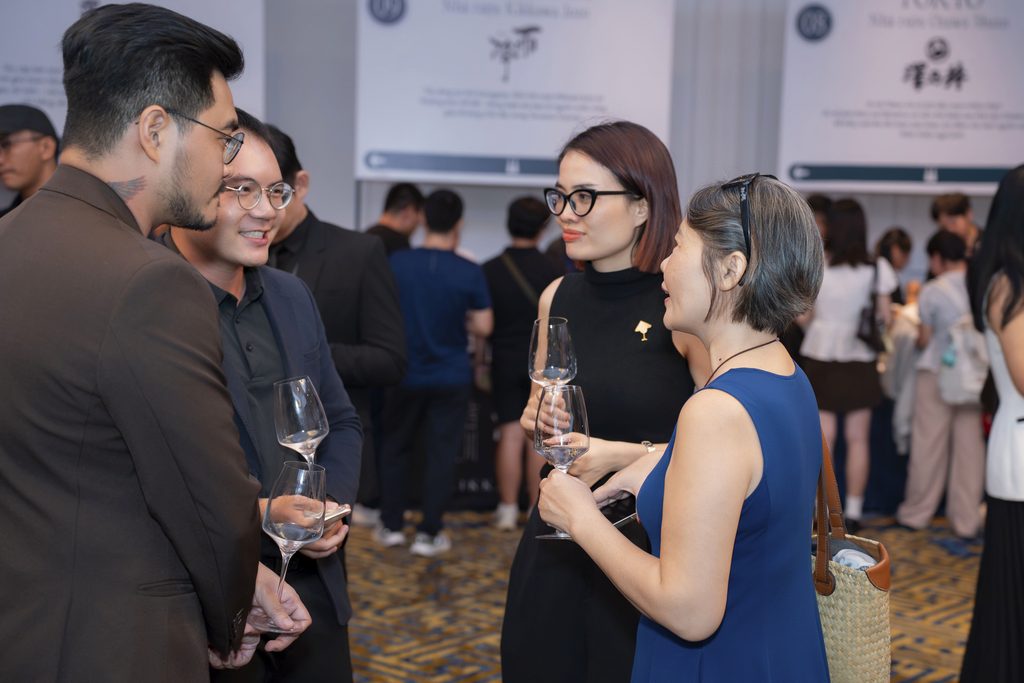
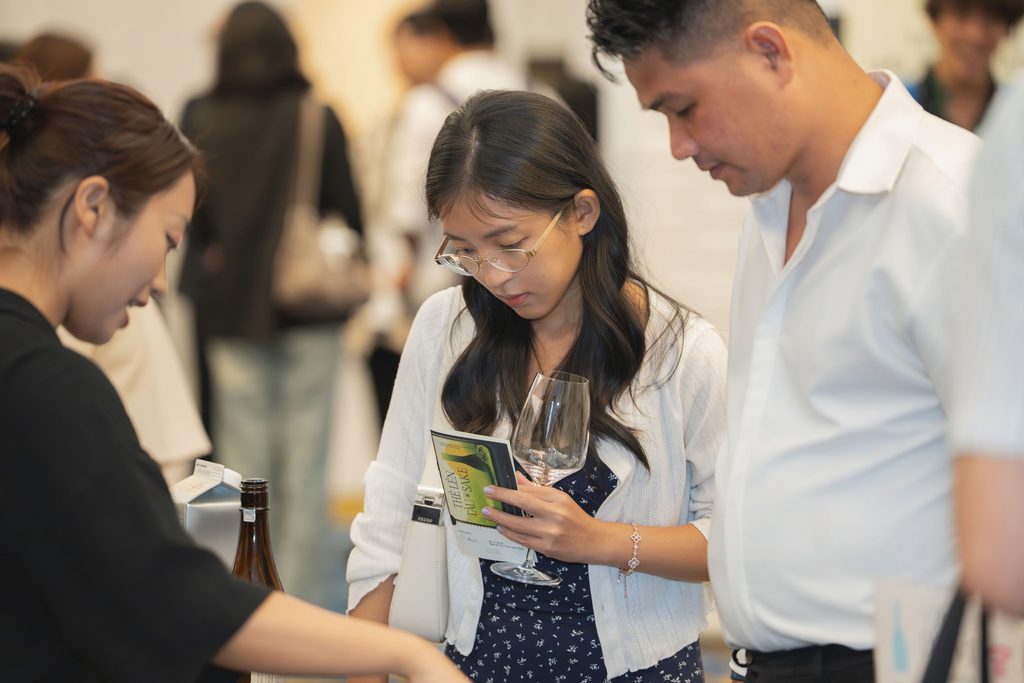
The “Sake Train” takes participants through 14 Japanese sake breweries, with opportunities for tasting and direct interaction.
When Japanese Sake Meets Vietnamese Cuisine
One of the questions raised at Xin Chào Sake 2026 was whether sake could pair naturally with familiar Vietnamese dishes.
During The Future of Sake in Vietnam panel discussion, Sake Specialist Trần Duy Bảo suggested that pairing sake with Vietnamese cuisine could begin by identifying similarities in flavour between the two culinary traditions.
For example, a sake aged in cedar barrels can carry peppery notes and woody aromas reminiscent of incense. In Japan, this style of sake is often paired with grilled eel. In a Vietnamese context, those flavour characteristics could bring to mind dishes such as cá kho tộ, caramelised braised fish in a clay pot, or fish roe served with tamarind fish sauce.
Starting from a Japanese pairing, drinkers can identify similarities in seasoning, richness and flavour structure within Vietnamese dishes to explore new ways of enjoying sake.
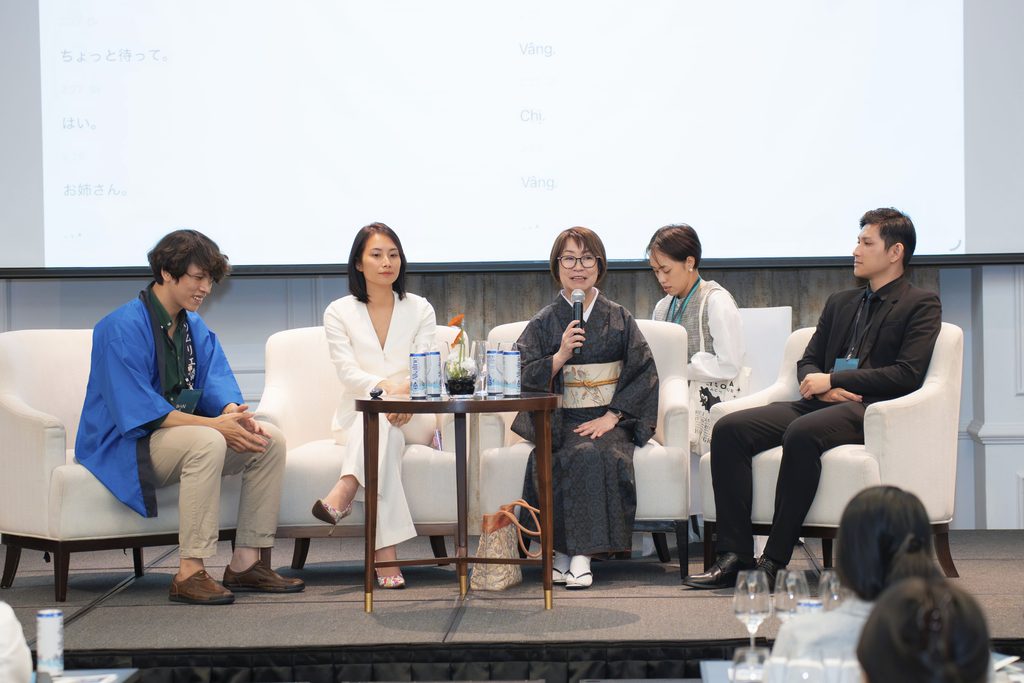
From a professional perspective, Sommelier Hà Ngọc Huyền also expressed the hope that sake could move beyond fine dining and omakase to become a more natural part of everyday Vietnamese meals.
It is an interesting direction. Vietnamese cuisine is rich in cooking techniques, spices and layers of flavour. From braised and grilled dishes to those with sour or spicy profiles, each can open up new possibilities for pairing with different styles of sake.
If sake can find a natural connection with familiar dishes, enjoying it does not necessarily have to be tied to a Japanese restaurant or a special occasion. Sometimes, the journey into sake can begin right at the Vietnamese dining table.
Beyond a Festival, TASU+ Aims to Develop Sake Culture in Vietnam
Behind Xin Chào Sake 2026 is TASU+, a sake specialist in Vietnam whose direction extends beyond introducing products to building a community and developing a broader culture of sake appreciation.
According to Hưng, Sake Educator at TASU+, Xin Chào Sake is not a standalone event but part of a longer-term journey to bring sake closer to Vietnamese audiences.
“Xin Chào Sake 2026 is part of TASU+’s series of activities aimed at developing sake culture in Vietnam. Beyond this event, we regularly organise cultural activities through Sake Club for people who enjoy sake, while also offering in-depth training programmes and sake certifications to bring sake culture closer to the Vietnamese community.”
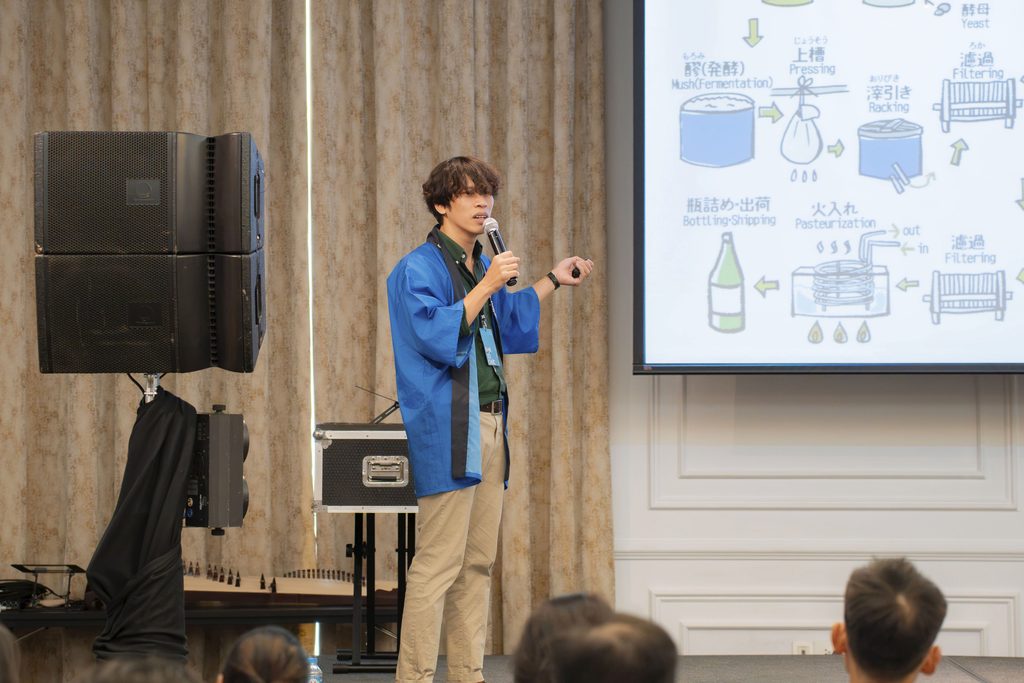
Through these community activities, newcomers have more opportunities to experience and learn about sake directly. At the same time, professional training programmes help equip F&B professionals with deeper knowledge, allowing them to introduce and recommend sake more confidently to Vietnamese diners.
This is also one way to make sake more approachable. Rather than being known only through technical terminology or Japanese dining experiences, sake can reach Vietnamese audiences through stories, cultural exchange and connections with local food culture.
From 14 Japanese sake breweries to more than 430 guests, the “Sake Train” at Xin Chào Sake 2026 created a meeting point for brewers, F&B professionals and Vietnam’s sake-loving community.
The journey does not end with a single festival. As sake gradually finds more connections with Vietnamese flavours, people and dining culture, Japanese sake culture also has more opportunities to become a familiar and natural part of life in Vietnam.
Learn more about TASU+’s activities, sake tasting experiences, and educational programs on: https://tasuplus.vn/