“Stand behind a bar long enough, and you’ll notice a particular kind of customer.
They don’t order right away. They scan the shelf for a moment, not because they don’t know what they want, but as if searching for something familiar. Then they say: “Give me a whisky. Anything is fine.”
“Anything is fine” — but I know, from the way they say it, that it isn’t.
I’ve poured whisky, mixed cocktails, drunk and savored it alongside countless people like that. And over time, I’ve come to understand: whisky is rarely something people order just to drink. It’s something people order when they need to sit quietly with themselves.
The Water of Life
The first official record of whisky appears in 1494, in a Scottish royal treasury document: “eight bolls of malt barley granted to Friar John Cor wherewith to make aquavitae” — enough for roughly 500 bottles by modern estimates.
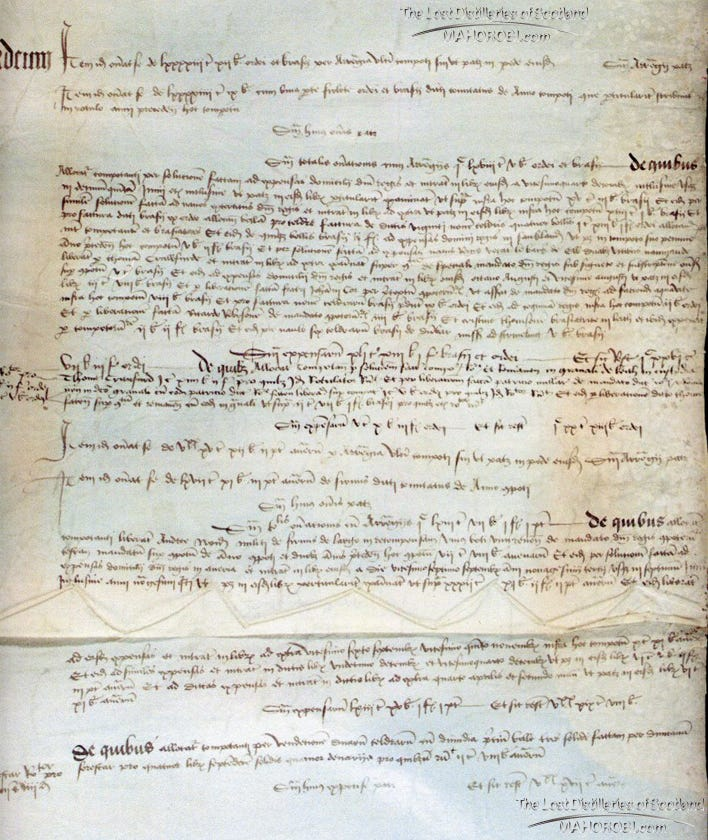
Aqua vitae. Latin: the water of life.
Friar John Cor had no way of knowing he was writing the opening line of an industry that would circle the globe. He was simply making medicine. Monks of that era distilled spirits to treat illness, preserve herbs, and perhaps, on the long, grey winters of that mist-laden land to get through the season. The Irish and the Scots both claim whisky as their own, and that argument has never reached a verdict. But one thing nobody disputes: whisky began as a remedy. Since then, the basic formula hasn’t changed much. What has changed is the understanding of how to control every variable in the process.
And then whisky left the monastery and stepped into the world.
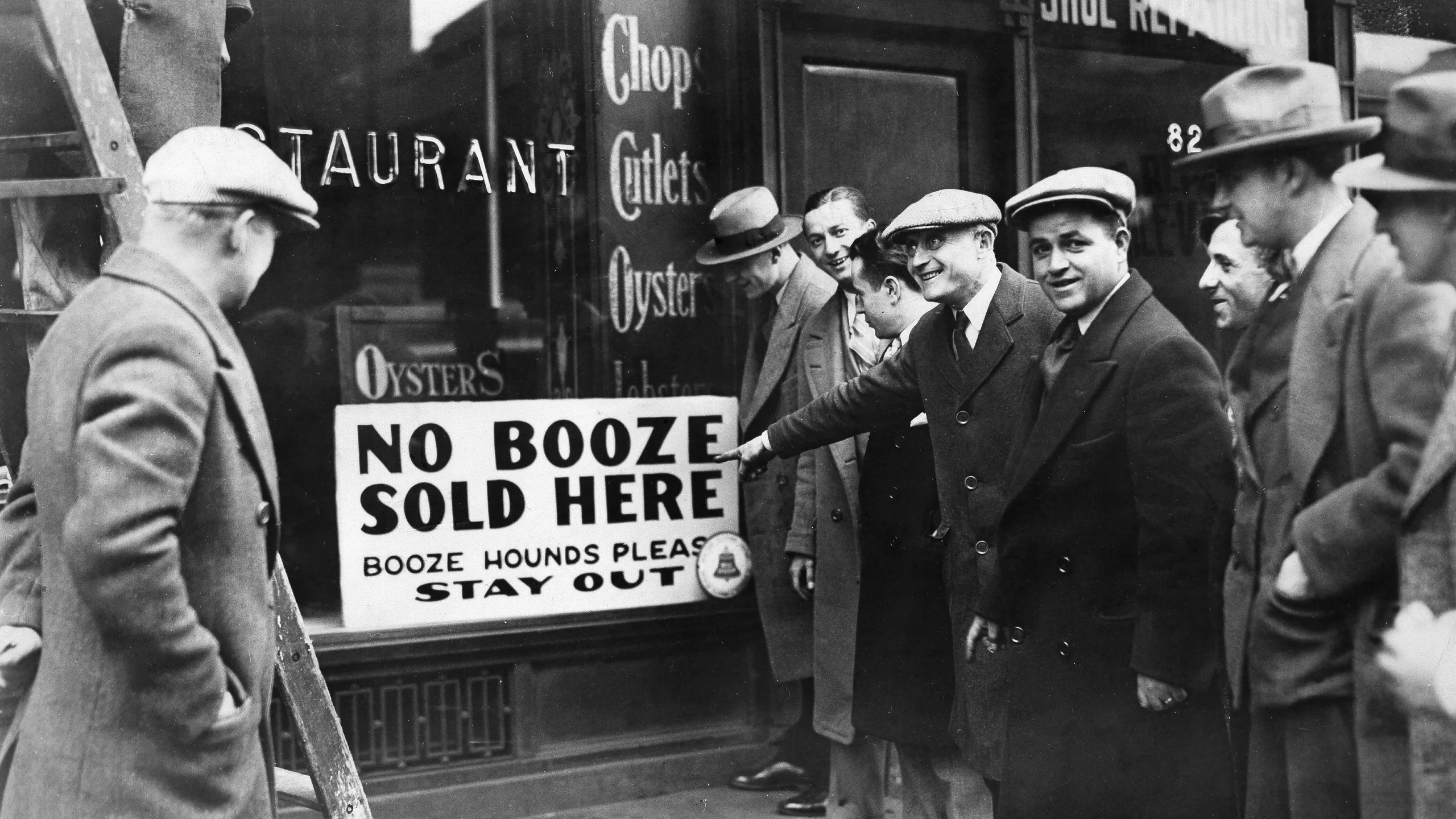
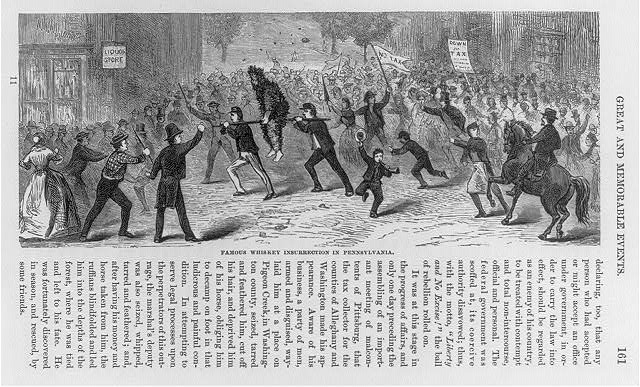
In the 18th century, the British government imposed heavy taxation. The Scots went underground distilling at night to hide the smoke, burying barrels in the earth, building smuggling networks so elaborate they were almost romantic. Across the Atlantic, whisky was valuable enough to function as currency during the American Revolution. When the fledgling government taxed it in 1791, farmers revolted, a historical event now known as the Whiskey Rebellion.
From very early on, whisky has never been just a drink.
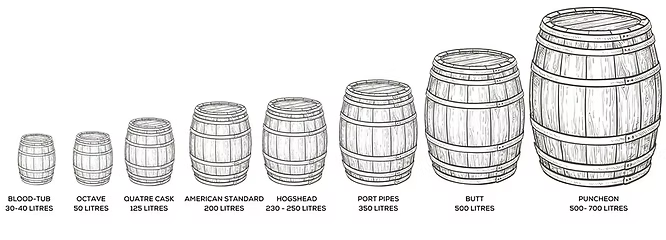
The Barrel — “Cocoons of Time”
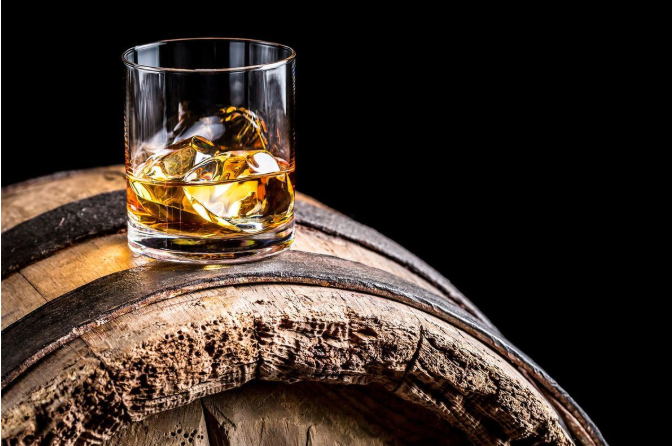
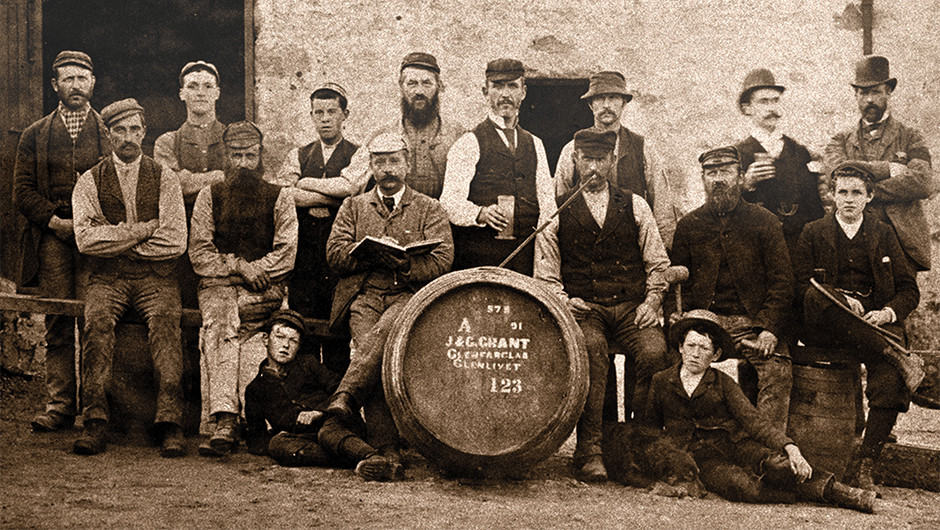
Whisky must age in wooden barrels — typically oak — for at least several years, sometimes several decades. During that time, the spirit absorbs color, breathes through the grain of the wood. Oak expands in the heat, contracts in the cold; each cycle draws the liquid deeper in and releases it back out carrying layers of flavor that no laboratory formula can replicate. The spirit enters the barrel nearly colorless — raw, unformed, not yet anything. Then the wood and the whisky begin a conversation that lasts for years.
What separates whisky from every other spirit isn’t the ingredients. It’s the waiting. Or more precisely — it’s time.
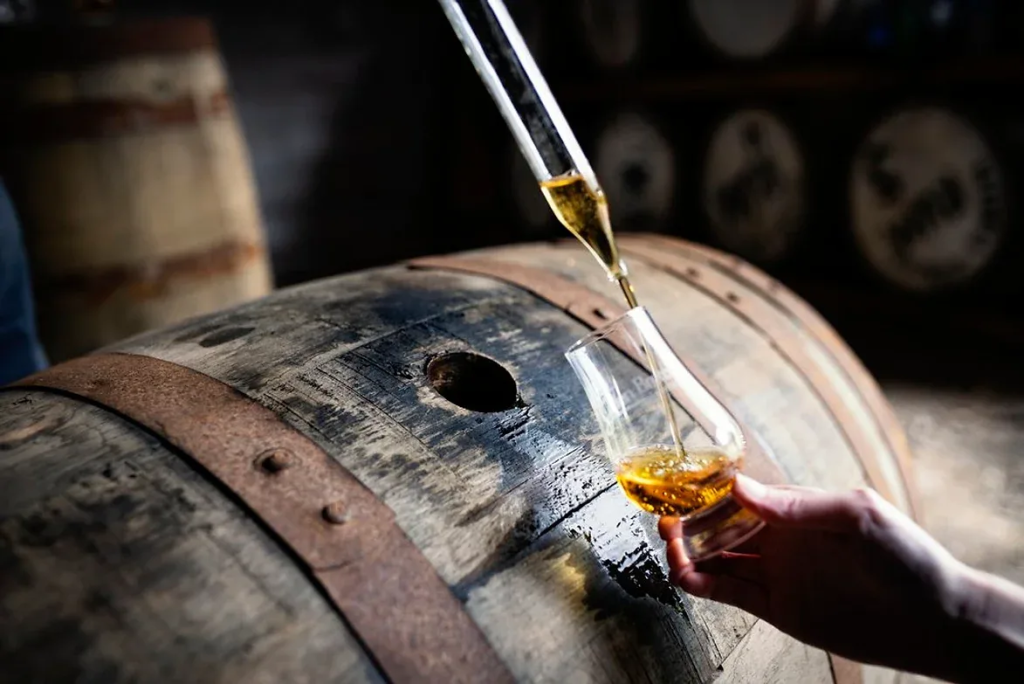
Vanilla from the lignin in oak. Caramel from the charred interior of the barrel. Smoke, stone fruit, leather, dark chocolate — all products of time and temperature. There are no shortcuts. There are no substitutes.
The Whisky Map
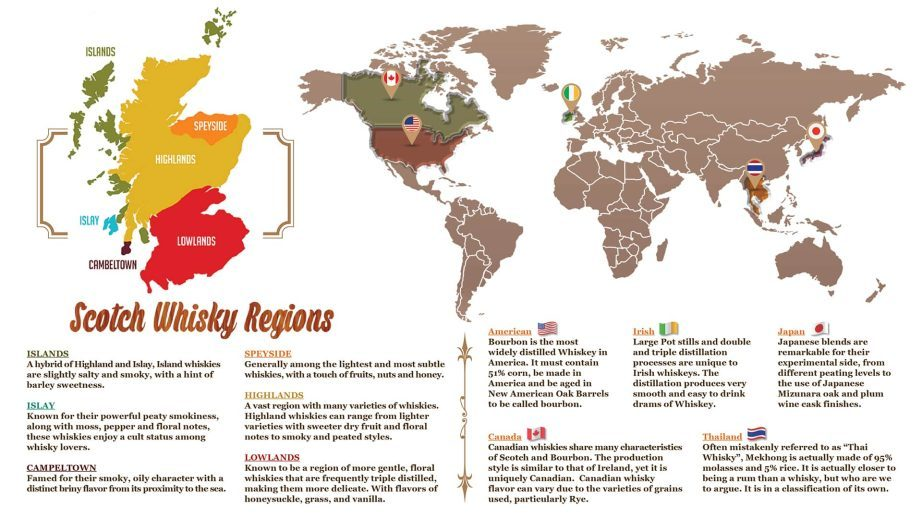
If you’re approaching whisky for the first time, the most disorienting thing isn’t the flavor, it’s the geography.
Because whisky has no single face. It is Scotch from Islay, carrying a peat-smoke character so assertive that first-time drinkers often furrow their brows — Ardbeg, Laphroaig, names my regulars call out like old friends. It is Speyside, smoother, fruitier, more approachable. It is the Highlands, vast and unpredictable, every distillery its own personality. It is Kentucky Bourbon, sweet and full-bodied, aged by law in new, never-used barrels. It is Irish Whiskey — triple-distilled, easy-going as a morning with nowhere to be. And it is Japan — where whisky became something refined and quiet in its own particular way, until the world caught on and couldn’t find enough bottles to buy.
Speaking of Japan: it is the whisky region that arrived latest on the scene, and yet the one I find most compelling.
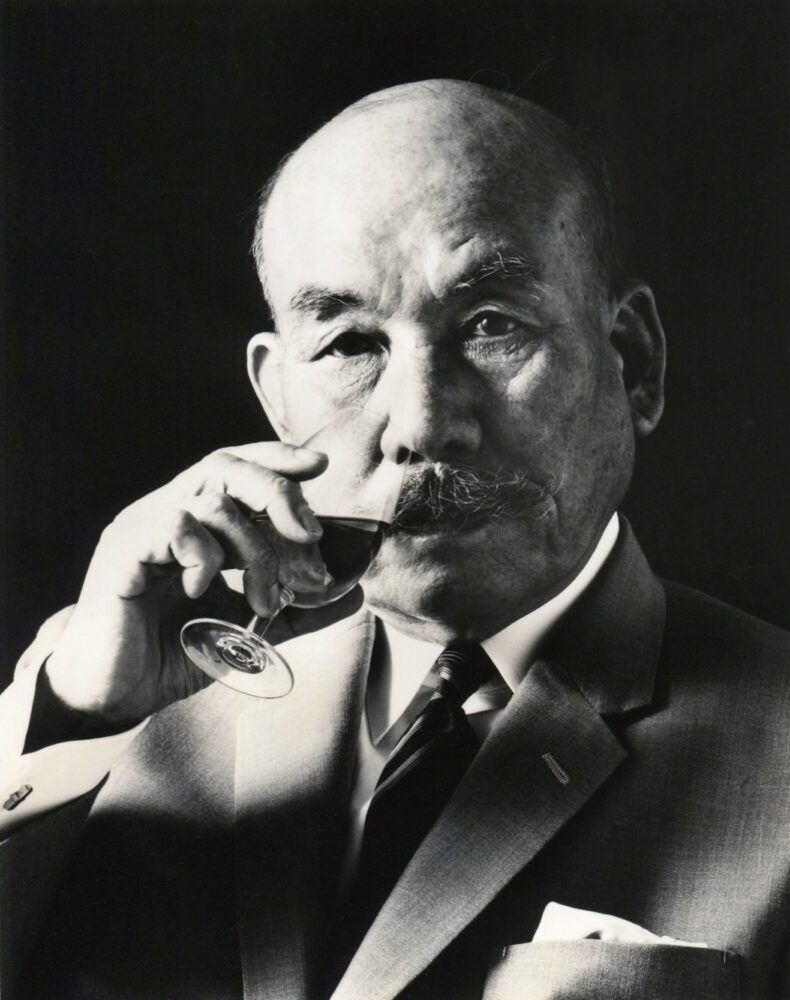
In 1923, Masataka Taketsuru — a young Japanese man — traveled to Scotland to learn the craft, married a Scottish woman, and brought the entire tradition home with him. He carried the Japanese spirit into it: meticulous control, an obsessive attention to detail, an entirely distinct aesthetic — and opened Japan’s first distillery at Yamazaki. Japanese whisky never tried to imitate Scotland. It applied the characteristically Japanese precision to every stage of production: delicate, economical, balanced to the point of near-silence. And that kind of silence sometimes says more than words.
Today, Yamazaki and Hibiki are ranked alongside the Scottish legends by the most demanding palates in the world. Whisky has proven something: it belongs to no single land. It belongs to those willing to be patient with it
Tropical Climate and Whisky?
Over the past decade or so, the whisky map is being redrawn in places no one anticipated.
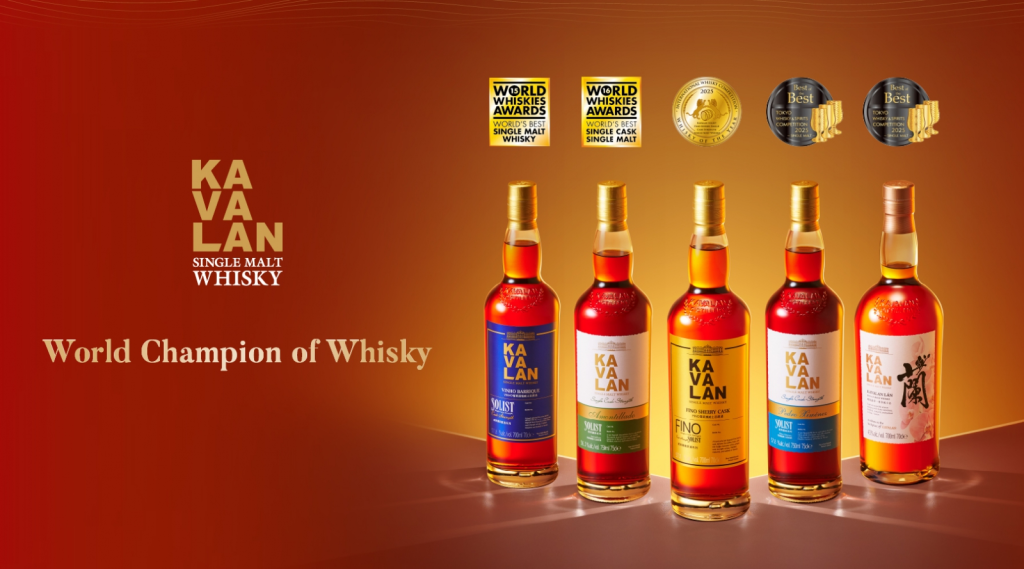
India with Amrut — launched in 2004, it forced Western critics to look twice. Taiwan with Kavalan — produced in a subtropical climate, it claimed international awards within just a few years of operation. The technical logic is straightforward: high temperatures accelerate the interaction between spirit and wood. A three-year Taiwanese whisky can achieve a complexity that might take a decade to develop in Scotland. The heat doesn’t kill whisky — it simply makes the wood and the spirit dance faster, more intensely, producing flavor profiles that Scotland would need decades to arrive at.
And closer to home: Hanoi.
In 2020, Về Để Đi was established — Vietnam’s first single malt distillery, and the first in all of Southeast Asia. The name translates as “I come so I can go” — a small philosophy hidden inside a bottle. More than 500 barrels of American and French oak are currently aging in the characteristic heat and humidity of Hanoi. According to founder Dr. Michael Rosen, one year of aging here is equivalent to roughly three years in Scotland. Their new make spirit just took “Best in the World” at the World Whiskies Awards 2025 in London. The first premium release is expected around Tết 2027.
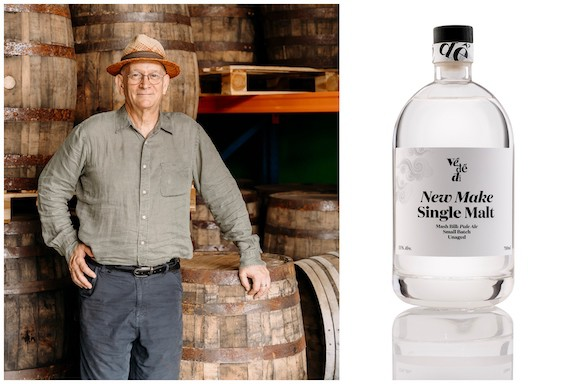
Not Scotland. Not Japan. Vietnam.
I don’t yet know what that bottle will taste like. But I want to live long enough to find out — to pour it into someone’s glass and watch them experience it for the very first time.
How to Drink – Rules and the Absence of Rules
Neat no ice, no water. This is whisky speaking at its most unguarded. It asks you to listen.
On the rocks ice chills and gently dilutes, opening some aromas while closing others. Not wrong — just a different conversation.
With a drop of water, not to dilute, but to unlock. Many distillers drink this way to fully access the elusive notes within a whisky that neat drinking can’t quite reach.
In a cocktail Old Fashioned, Manhattan, Whisky Sour, and beyond. A cocktail doesn’t diminish whisky. It’s simply whisky telling its stories through a different voice.
But truthfully, there is no absolute rule for enjoying whisky. There is only what fits — that particular evening, that particular mood, that particular person.
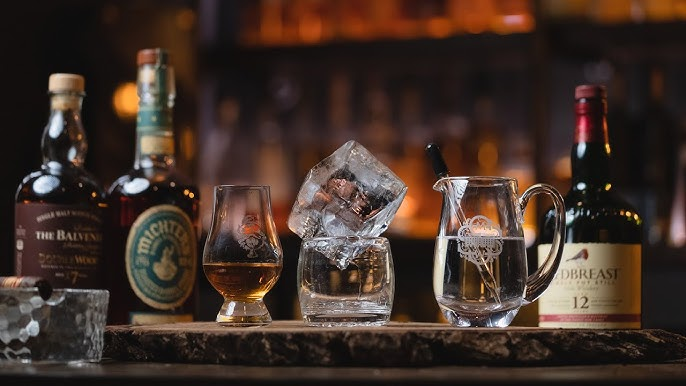
After years behind the bar, I’ve come to understand that whisky isn’t something you grasp immediately. It requires time — not only inside the barrel, but inside the drinking of it.
World Whisky Day is whisky’s day, but it doesn’t ask you to be an expert. It doesn’t require you to distinguish Speyside from the Highlands on the nose alone, or to identify the corn percentage in a Bourbon by smell, before you’re permitted an opinion.
It shows up simply to invite you. To slow down for a moment. To ask where this came from, how long it lived inside its barrel, how many hands it passed through before reaching yours.
And perhaps — in that sip — you’ll recognize something familiar, even though you’ve never encountered it before.
Whisky is one of the rare drinks that teaches its drinkers patience. And perhaps that’s why those customers who stand quietly scanning the shelf before ordering — they’re not choosing a glass of liquor. They’re finding their own rhythm again. And whisky, as always, waits.

Written by Bartender Gia Linh (Sâu)
Sources: Scotch Whisky Association; The Drinks Business; World Whiskies Awards 2025; Vietcetera; Drinks International — “Về Để Đi: Vietnam’s Entry into New World Whisky.”

Gia Lĩnh (Sâu) is a bartender and storyteller exploring the world of spirits, cocktails, and bar culture. To him, every drink is more than just a recipe; it carries history, human connections, and values preserved through time. Through his writing, Lĩnh hopes to bring these stories closer to communities passionate about food and beverages.