
— “One martini, please — and use [a specific gin bottle] to make it!”
There’s a certain type of customer who walks up to my bar and orders exactly like that, and they’re my favourite kind. They know what they want, and they’re expecting more than just a cocktail -they’re waiting to be surprised. Because gin is a spirit where even the smallest change in preparation can create an entirely different result in the glass. Gin itself is already complex: each bottle differs in its botanicals, its history, the story of the distillery behind it.
Gin is the spirit I find hardest to introduce, from where I stand behind the bar. Not because of its complexity – but because every time I think I understand it, it shows up wearing a different face.
The first time I really sat down and read about gin’s history was a quiet evening with no customers, the shelves wiped down and nothing left to do. I picked up a bottle of Bols Genever – a Dutch-style gin we’d stocked but that almost no one ever ordered and started wondering why it felt so different from the London Drys standing next to it.
Medicine, Liquor, Then a Whole Culture
Genever is gin’s ancestor. The Netherlands, 13th century – people were distilling malted grain and infusing it with juniper berries as medicine: for digestion, kidney ailments, warmth. The figure most often cited in genever’s development is Franciscus Sylvius a physician and chemist of the 17th century credited with refining the distillation of grain spirit with juniper to produce a medicinal remedy. But “gin” actually traces back to “Genever,” which itself comes from the French genièvre, meaning juniper. That botanical eventually became the defining, mandatory flavour of every modern gin.
From medicinal distillates in the Flanders of the 13th century, genever grew into a common drink during the Dutch Golden Age of the 17th century. They drank it neat in tulip glasses, or alongside beer in the style of a kopstoot the “head-butt” as the Dutch and Belgians called it. When I poured a taste from that Bols Genever bottle, I understood why it rarely got ordered: it asks the drinker to slow down and listen to each layer of aroma and story that its ingredients carry, rather than letting the spirit chase their curiosity for them.
“Dutch Courage” and a City Out of Control
Gin reached England in a way no one could have planned.
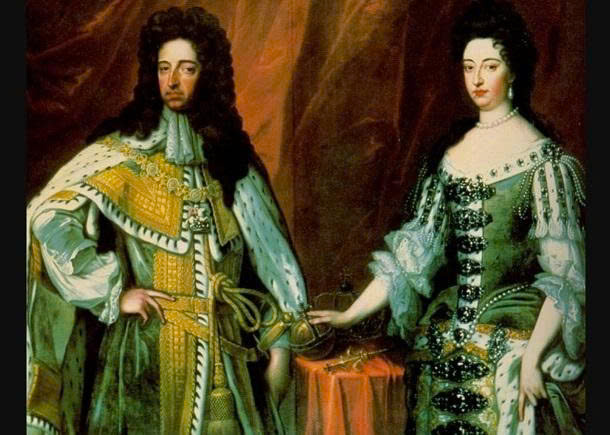
English soldiers fighting alongside the Dutch in the 17th century noticed something: Dutch troops drank genever before battle. They called it “Dutch courage.” When the soldiers returned home, they brought the habit with them. Then in 1689, William III a Dutchman ascended to the English throne, banned French brandy imports, and threw the entire market open to domestic gin. The Act of 1690 allowed anyone to produce gin cheaply, and London at the time was a city exploding in population, deep in poverty, in desperate need of a cheap escape.
Gin was cheaper than water. Cheaper than beer. And for nearly four decades roughly 1720 to 1757 London drowned in the Gin Craze. Hogarth’s painting Gin Lane captured that era without a single embellishment.
Gin then was not refined. It was rough, it was cheap, it was a social crisis. Until the British government had to intervene with the Gin Acts of 1736 and 1751 to bring it under control. And that pressure paradoxically pushed gin into the most important period of its evolution.
The Continuous Still and the Birth of London Dry
Into the 19th century, everything changed with one technical invention: the continuous column still. Instead of batch distillation, the column still allowed continuous production — and more importantly, produced a far purer, higher-strength spirit.
From that emerged London Dry Gin a dry, clear style, defined by assertive juniper and strict distillation standards. Despite the name “London,” the style isn’t geographically restricted to England it’s an international legal standard governing purity and consistency of flavour. And it remains the most dominant gin style in modern cocktails.
Botanicals — Where Everything Becomes Unpredictable
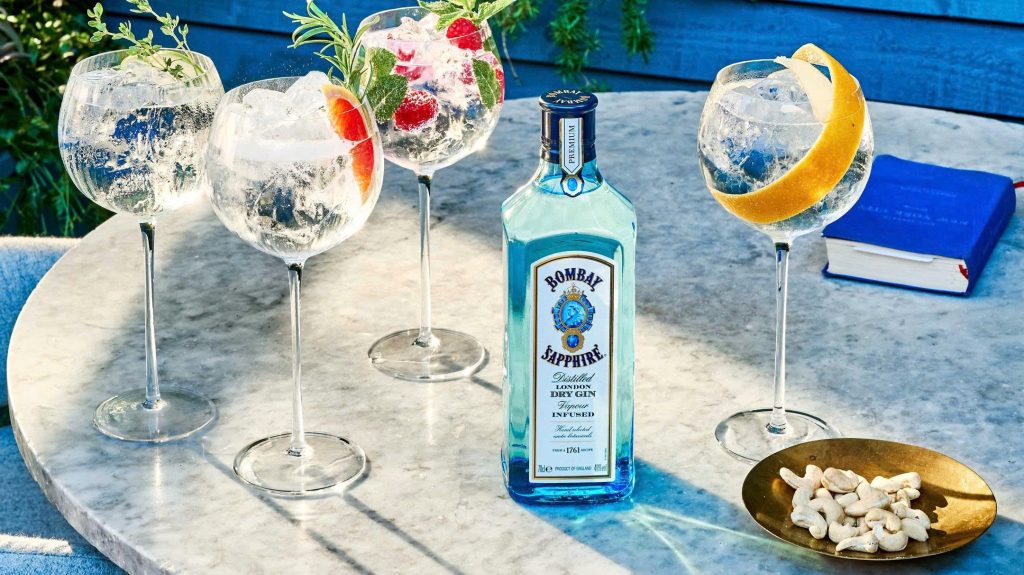
Gin is made by redistilling neutral spirit with botanicals aromatic plants that impart flavour. Juniper is mandatory. But everything beyond that is the producer’s choice: orange peel, lemon, coriander seed, angelica root, cinnamon, lavender, peppercorn, hibiscus, green tea, lemongrass, ginger the list has no end.
This is what sets gin apart from every other spirit. Whisky needs time years in wood to develop character. Gin doesn’t need time in that sense. What creates its complexity is selection: which botanicals, in what ratio, distilled how, added at which point in the process.
Which means: no two gins are truly alike. There’s no “standard gin” you can memorise and be done with. Each bottle is its own botanical portrait and that portrait shifts with the producer, the region, the harvest season of each plant.
I once tried a Japanese gin infused with green tea and sakura blossoms — so delicate that when you sipped it, every sense seemed to go quiet. The kind of quiet where, even after the spirit has dissolved on the palate, you’re still sitting beneath a cherry tree with a cup of tea in your hands. Then an African gin with red hibiscus — deep, fruity, entirely unlike the tea-infused one. Both gin. Both infused by the same method. Both built on juniper. Yet standing side by side on the shelf, they’re two people who don’t speak the same language.
The Many Faces of Gin
When I guide first-time gin drinkers, the first thing I ask isn’t “what flavour profile do you like?” it’s “are you drinking it neat or in a cocktail?”
Because gin has no fixed boundary, no single definition, and you can only begin to understand it through imagination first through smell then through what it does in your mouth. But I always offer guests a map to help them find their way:
London Dry dry, sharp, juniper-forward. The gin of Martinis and Negronis. Old Tom Gin is the middle ground between genever and London Dry slightly sweeter, more layered, suited to the classic cocktails that predate the London Dry era. Plymouth Gin is produced only in the port city of Plymouth earthy, softer, historically tied to the Royal Navy. Navy Strength sounds heavy just by name, and it is but the distinction isn’t about flavour, it’s about ABV, historically issued to the British Navy. New Western Dry is the contemporary style that steps back from juniper to foreground other botanicals: florals, fruit, local herbs. And finally, Genever ancestor of them all, still alive in the Netherlands and Belgium, still carrying that malty character no other gin possesses.
Gin & Tonic
You can’t talk about gin and skip the Gin & Tonic.
The simplest drink on any back bar carries an entire chapter of colonial history inside it. In the 19th century, British officers stationed in India mixed gin into tonic water containing quinine a compound used to prevent malaria. The bitterness of quinine was balanced by gin and sugar, and that drink gradually became a popular refreshment. It spread across the world and became one of the defining symbols of British cocktail culture.
Today, a Gin & Tonic is no longer a recipe it’s a canvas. Which tonic, which gin, which botanical garnish: every choice produces a different flavour picture. That’s why, from the first time I ordered one to every shift I’ve worked since, I still haven’t run out of variations to try.
Martini, Negroni, and Why Gin Is the Foundation of Cocktails
From the late 19th century through the early 20th, gin became the soul of the golden age of bar culture.
The Martini is called the “queen of cocktails” for its minimalism and elegance. Gin or vodka stirred with dry vermouth, served in a conical cocktail glass, garnished with an olive or a lemon twist. That kind of refinement is something you can see before you taste it and it needs no explanation.
The Negroni has a different story, and one I enjoy telling every time I make one. Count Camillo Negroni, an Italian nobleman, in the early 20th century asked a bartender at Caffè Casoni in Florence to make his Americano stronger by replacing the soda with gin. The Negroni was born: the bitterness of Campari, the gentle sweetness of vermouth, and the layered botanical depth of gin three things that seem unrelated, somehow arriving at a rare balance that is simultaneously bold and refined. The Negroni is now celebrated with an annual global Negroni Week, and remains the favourite cocktail of generations of bartenders mine included.
Never Stopping, Always Changing
Unlike whisky, which needs decades in wood, gin doesn’t age. What creates its complexity isn’t time it’s botanical selection.
Which also means: gin changes faster than any other spirit. Today, gin is in the middle of a powerful renaissance hundreds of craft distilleries have emerged worldwide, each experimenting with local botanicals to create gins that carry a genuine sense of place. Japanese gin built on green tea. African gin shaped by hibiscus. Southeast Asian gin driven by lemongrass and ginger. Gin doesn’t wait to become something. It arrived as something, and simply keeps finding ways to be more interesting.
That’s also how gin has operated throughout its history — not through grand designs, but through small decisions: replace this with that, add this to that and when you look back, something unexpected has been made.
That’s what I can never fully explain when a guest asks, “What is gin?”
Because the right answer depends on which bottle is in front of you, what’s inside it, and what context you’re drinking it in. Gin has no fixed face and I think that’s not a weakness. It’s the reason it’s still here, seven centuries on, still finding ways to make itself worth your time.
Next time you hold a glass of gin, read the label. See what botanicals they’ve used. That might be the first time you actually start drinking gin rather than just drinking a spirit.
You don’t need to know its entire history to enjoy a Gin & Tonic. But maybe, the first time you catch the scent of juniper in the air, you’ll find yourself wanting to know where it all began.
And that’s what gin has always done: open a door. So you can walk through it yourself.

Gia Lĩnh (Sâu) is a bartender and storyteller exploring the world of spirits, cocktails, and bar culture. To him, every drink is more than just a recipe; it carries history, human connections, and values preserved through time. Through his writing, Lĩnh hopes to bring these stories closer to communities passionate about food and beverages.