When California Shocked the World
Few moments in modern wine history have reshaped global perception as profoundly as the blind tasting held in Paris on May 24, 1976. What began as a modest promotional event would eventually become one of the most influential turning points the wine industry has ever witnessed.
The event, later immortalized as the “Judgment of Paris,” was organized by Steven Spurrier, a British wine merchant and educator based in Paris. Intended to celebrate the bicentennial of the United States, the tasting set out to compare French wines with a selection of emerging Californian producers. At the time, however, the outcome appeared almost predetermined.
France occupied an unquestioned position at the summit of fine wine. Bordeaux symbolized prestige, heritage, and authority, while Burgundy represented the ultimate expression of Chardonnay. California, by contrast, was still viewed as an ambitious outsider, a young wine region lacking the centuries of tradition that defined Europe’s most revered appellations.
Even Spurrier himself expected the French wines to dominate.
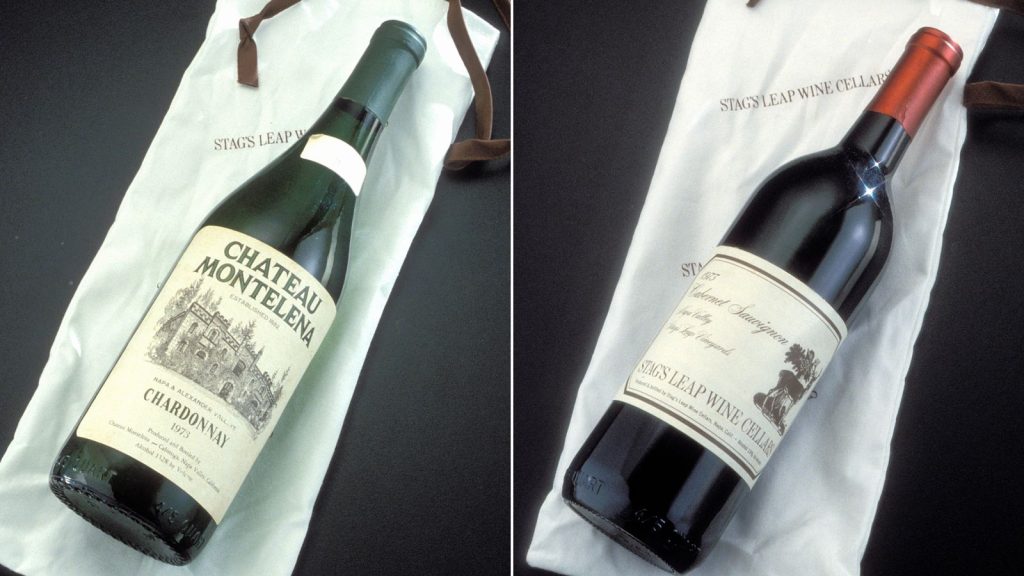
To ensure credibility, he assembled a judging panel made up of some of France’s most respected wine professionals, including Odette Kahn of Revue du Vin de France and Jean-Claude Vrinat of the legendary Parisian restaurant Taillevent. Nearly every judge entered the room convinced that no American wine could rival the great estates of Bordeaux or Burgundy.
The tasting was conducted blind and structured in two flights. The white wine category paired California Chardonnay against leading White Burgundies, while the red wine category compared California Cabernet Sauvignon with some of Bordeaux’s most celebrated wines.
Then came the moment that stunned Paris.
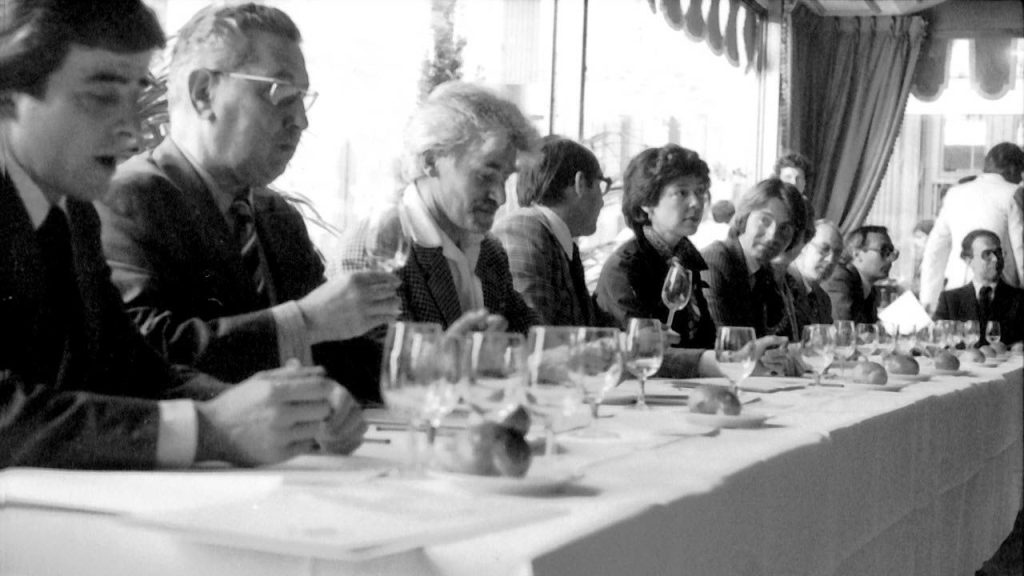
In the white wine flight, Chateau Montelena Chardonnay 1973 ranked ahead of several prestigious Burgundian producers. Yet the greater surprise emerged in the red wine category, where Stag’s Leap Wine Cellars Cabernet Sauvignon 1973 surpassed iconic Bordeaux estates including Chateau Mouton Rothschild and Chateau Haut-Brion.
For the first time in modern history, New World wines had defeated the established icons of France, on French soil, under the judgment of French experts.
The reaction was immediate and emotional. Some judges questioned the scoring and requested to review the results. French media initially approached the story with hesitation, uncertain of how to interpret what had just occurred. Yet beyond Paris, the impact spread quickly after George M. Taber, the only journalist present that day from Time Magazine, reported the story internationally.
What had been intended as a small tasting suddenly became a symbolic moment that challenged centuries of accepted hierarchy within fine wine.
The Tasting That Changed the Fine Wine Landscape
The significance of the Judgment of Paris extended far beyond a single competition. It fundamentally altered how the industry defined greatness.
Before 1976, fine wine was largely synonymous with Europe, particularly France. Reputation and origin carried immense authority. A Bordeaux or Burgundy label was often considered a guarantee of superiority, while wines produced outside Europe struggled for serious recognition regardless of quality.
The Judgment of Paris disrupted that belief system entirely.
For perhaps the first time on a global stage, the wine community was confronted with the idea that excellence did not belong exclusively to one geography or tradition. Once labels and prestige were removed, sensory experience alone became the deciding factor.
However, France’s defeat did not simply reflect a difference in quality. Many wine professionals later argued that the blind tasting environment naturally favored the Californian wines. The Chardonnay and Cabernet Sauvignon from Napa Valley often displayed generous fruit expression, softer textures, and immediate accessibility. Many Bordeaux and Burgundy wines, meanwhile, were still restrained and tightly structured, requiring additional aging before revealing their full complexity. Once labels and reputation disappeared, the wines that created the strongest first impression held a natural advantage.
What shocked Paris in 1976 may no longer surprise today’s consumers. Yet at the time, the result was almost unthinkable.
In the years that followed, Napa Valley experienced extraordinary growth. Investment flowed rapidly into California’s wine sector, vineyard values increased dramatically, and American producers began to earn legitimate recognition within the fine wine category.
More importantly, the event opened the door for the rise of the broader New World wine movement. Countries such as Australia, New Zealand, Chile, Argentina, and South Africa gradually gained greater credibility among critics, sommeliers, and international consumers.
The Judgment of Paris also elevated blind tasting into one of the most trusted methods of wine evaluation. Over time, it became central to sommelier education, wine competitions, and modern wine criticism.
Fifty Years Later – Why the Judgment of Paris Still Matters
Fifty years later, the Judgment of Paris remains one of the defining moments of modern wine culture.
Today, it is no longer controversial for a Napa Valley Cabernet Sauvignon or an Australian Shiraz to stand alongside the great wines of Bordeaux. The industry has become far more open, international, and dynamic than it was in 1976.
Yet the enduring importance of the Judgment of Paris lies not solely in California’s victory, but in the shift in mindset it created.
It reminded the industry that true greatness has no borders.
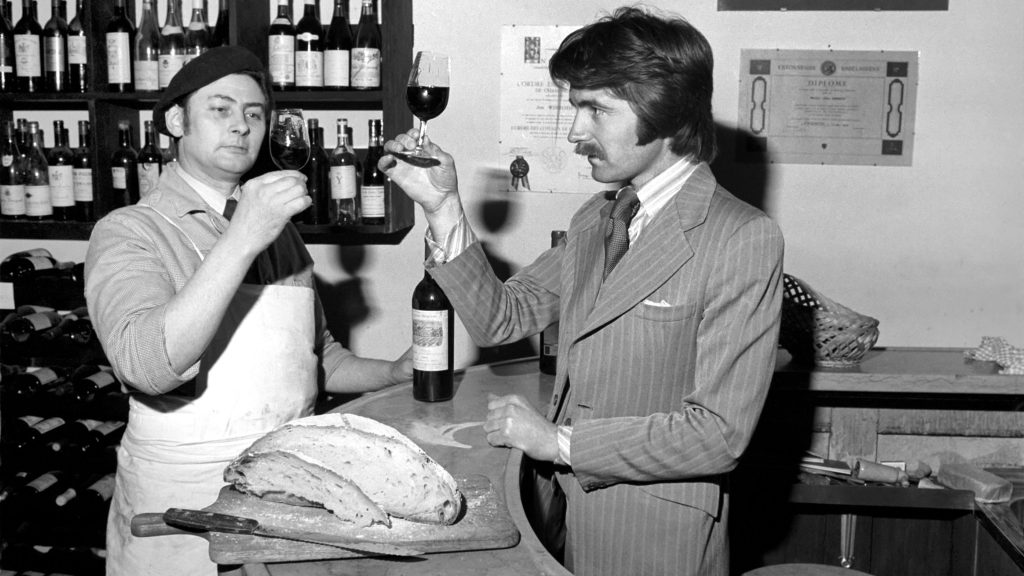
In a field long shaped by tradition, prestige, and inherited reputation, the tasting marked the beginning of a more democratic era, one in which craftsmanship, terroir, and vision could transcend geography.
Today, the spirit of the Judgment of Paris continues to live on in every blind tasting competition, every ambitious young producer, and in the growing openness of modern consumers toward discovering excellence beyond the traditional boundaries of Europe.
Fifty years later, the Judgment of Paris is no longer merely a story about California defeating France.
More than a competition, it became the moment fine wine ceased to belong to one nation alone.
Written by Sommelier Huong Le
Lê Thu Hương is a seasoned wine professional with over 15 years of experience in wine and spirits. She is a Board Member of the Vietnam Sommelier Association (VSA) and currently serves as Sales & Marketing Manager at Penfolds Vietnam.
Ms Huong was the runner-up of the Best French Wine Sommelier in Vietnam 2017 and is the Vietnamese translator of “24 Hours Wine Expert” by Jancis Robinson and “Wine Folly” by Madeline Puckette & Justin Hammack. Her qualifications include WSET Level 3, Certified Wine Specialist, and a Sake Making Certificate from Gekkeikan Sake School, Kyoto.