The 1976 Judgment of Paris is remembered as one of the most significant milestones in modern wine history. When California wines outperformed some of France’s most prestigious labels in a blind tasting, the event did more than put California on the world wine map. It challenged long-established perceptions of quality, origin and reputation in the wine industry.
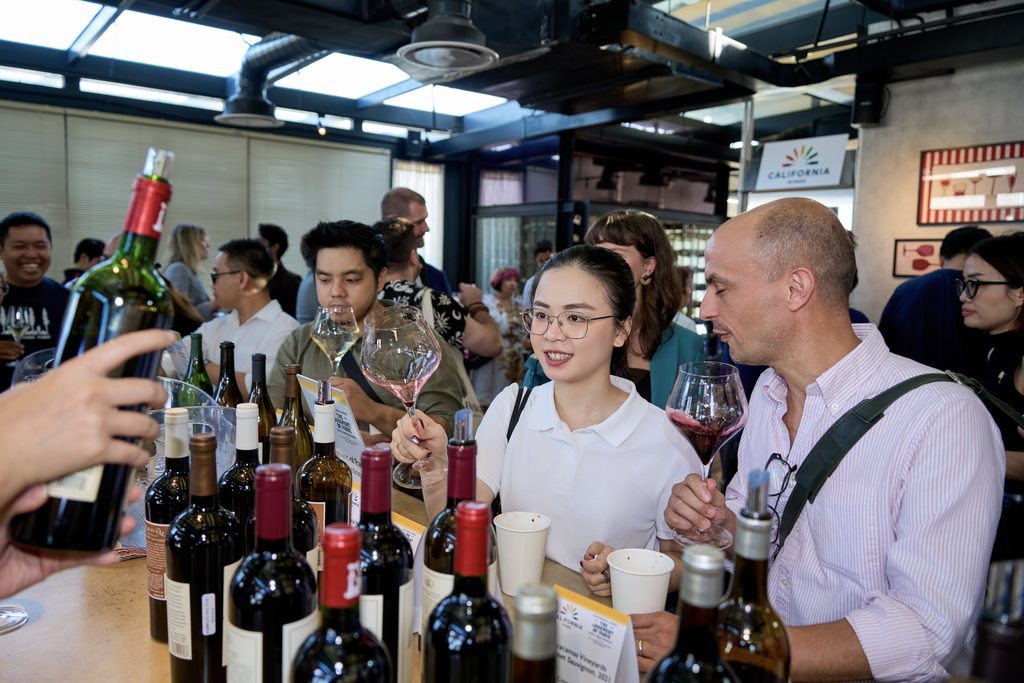
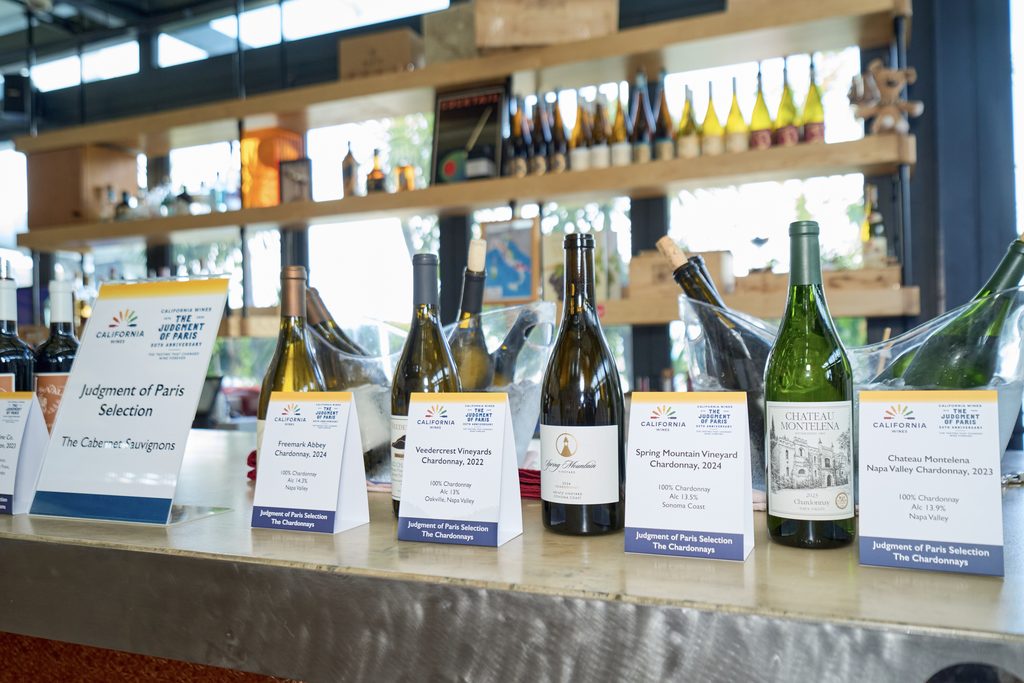
On October 28, 2026, I had the opportunity to attend a special 50th-anniversary celebration of the Judgment of Paris, organised by the California Wine Institute in Ho Chi Minh City, Vietnam. During the event, Mr. Christopher Beros, Regional Director for Greater China and Southeast Asia at the California Wine Institute, revisited this historic moment and presented an 11-minute documentary featuring several fascinating behind-the-scenes stories.
The presentation sparked my curiosity and inspired me to explore the events of Paris in 1976 more deeply: the people behind the tasting, the media and market reactions that followed, and the lasting impact it had on the global wine industry.

1. It All Began with Curiosity
Paris, 1976. At the time, France was widely regarded as the benchmark of the wine world. Bordeaux and Burgundy were not merely wine regions; they represented centuries of history, tradition and prestige. French wines dominated the lists of many fine-dining restaurants, including those in major culinary centres such as New York. California, by contrast, was still considered a relatively young wine-producing region, with little of the recognition enjoyed by Europe’s established wine regions.
Yet in Paris, where French wine was held in such high regard, one man had begun to take an interest in wines from California. His name was Steven Spurrier, an English wine merchant who ran Les Caves de la Madeleine and L’Académie du Vin, a wine school in Paris.
Through his business, Spurrier came into contact with California producers, who introduced him to their wines and invited him to taste them. These encounters sparked his curiosity. How good were California wines, really? And how would they perform alongside some of France’s most celebrated bottles?
Rather than relying on reputation or simply taking producers’ word for it, Spurrier decided to find out for himself. Together with his colleague Patricia Gallagher, he organised a blind tasting in which the judges would evaluate the wines without knowing their origins or producers.
On May 24, 1976, the tasting took place at the InterContinental Paris. California wines were placed alongside some of France’s most prestigious labels in a competition that few expected would produce such a surprising result.
What makes the story even more remarkable is that Spurrier never intended to stage a historic showdown. Nor did he expect American wines to win. For him, it was simply an opportunity to explore and compare wine quality.
Sometimes, however, history does not begin with a grand plan. It begins with the curiosity of someone willing to question what everyone else takes for granted.
2. The French Journalists Who Never Showed Up
Steven Spurrier had invited several French journalists to attend the tasting. However, none of them accepted. Apparently, they did not consider a comparison between California and French wines important enough to warrant their time.
In the end, only one journalist showed up: George M. Taber, a reporter for TIME magazine. He became the only member of the press present to document what would later become a historic moment.
In a subsequent interview, Taber recalled:
“Everybody knows that French wines are going to win, so why waste a day? It’s the giant and the little guy. Nobody took it seriously.”
His words reflect the prevailing attitudes of the wine world at the time. California was not considered a serious competitor, and almost nobody imagined that the tasting could produce an unexpected outcome.
Without George Taber, the tasting would still have taken place and its results would still have been announced. But would the story have travelled around the world in the way it did?
3. Nine French Experts Faced an Unexpected Result
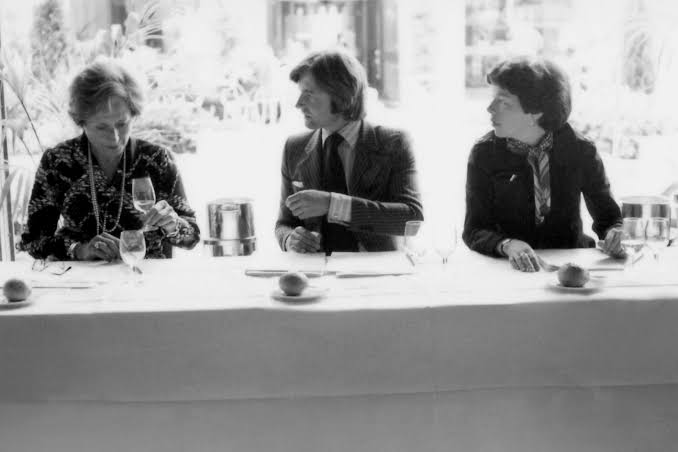
One of the defining features of the Judgment of Paris was its blind-tasting format. The judges did not know which wines they were tasting, where they came from or who had produced them. They had only the wine in their glasses and their own sensory experience to guide their assessments.
The judging panel consisted of nine French experts representing different areas of the wine and culinary industries. Among them were Aubert de Villaine, co-manager of Domaine de la Romanée-Conti; Pierre Tari, owner of Château Giscours in Margaux; Jean-Claude Vrinat, owner of the renowned Paris restaurant Taillevent; and Raymond Oliver, chef and owner of Le Grand Véfour, alongside respected wine critics, tasting experts and sommeliers.
This was no ordinary panel. These were people with deep knowledge of French wine, whose traditions and reputations had been built over generations. That is precisely why the result was so astonishing: California wines had outperformed some of France’s most prestigious competitors in a blind tasting judged by French experts.
California claimed the top positions in both categories. Château Montelena Chardonnay 1973 won the white wine category, while Stag’s Leap Wine Cellars Cabernet Sauvignon 1973 took first place among the reds.
According to Steven Spurrier’s later recollections, after the results were announced, judge Odette Kahn asked for her score sheet back, but he refused. The episode offers a glimpse into just how strongly the results were received.
The Judgment of Paris did not prove that California wines were always better than French wines. Rather, it delivered a powerful message: wine should be judged by what is in the glass, not simply by its label, reputation or place of origin.
Blind tasting had existed long before 1976, but the Judgment of Paris helped bring greater public attention to its value and demonstrated the importance of evaluating wine without the influence of preconceived opinions. Today, blind tasting is a familiar practice in sommelier education, professional competitions and wine evaluation.
4. The TIME Article That Started It All Was Only Four Paragraphs Long
Many people might assume that after California’s victory, TIME immediately published a major front-page feature. The reality was far more modest.
On June 7, 1976, about two weeks after the tasting in Paris, George M. Taber’s article appeared on page 58 of TIME under the title Modern Living: Judgment of Paris. It consisted of just four paragraphs, with no accompanying photographs and no major feature treatment. Taber himself later acknowledged that it was a relatively small news item in the magazine.
Yet those four paragraphs set in motion a media story that would travel far beyond what the writer could have imagined.
The American market began reacting soon after the article appeared. According to historical material from Harvard Business School, Manhattan wine retailer Acker Merrall & Condit had sold out of its five cases of the winning wines by around noon the following day. The Washington Post also reported a sharp increase in demand for the winning wines at retail stores across the United States in the days that followed.
The story gained further momentum when Frank J. Prial, wine columnist for The New York Times’ Wine Talk column, published two consecutive articles in the following month examining the significance of the tasting. These stories were subsequently circulated through newspaper syndication networks, helping the Judgment of Paris reach a much wider American audience.
Interestingly, the reaction in France was quite different. While American media began celebrating California’s remarkable victory, the event initially received relatively little attention in France. According to later accounts, Patricia Gallagher recalled that people in France were largely indifferent to the result. The story of a tasting that had seemed relevant mainly to industry insiders was being presented by American media in a very different light: California had defeated some of France’s greatest names.
The story did not end with the newspaper coverage of 1976. In 2005, George Taber published Judgment of Paris: California vs. France and the Historic 1976 Paris Tasting That Revolutionized Wine, documenting the event and the people behind it in much greater detail. In 2008, the film Bottle Shock brought the story to a wider audience, although several elements were fictionalised.
Perhaps most surprisingly, George Taber himself did not immediately realise the significance of his four-paragraph article. In a 2005 interview, he recalled that it was only when he returned to Napa Valley for the 20th anniversary of the tasting that he began to understand how important the story had become to the wine industry.
5. France’s Reaction: Victory Was Not Easily Accepted
While the American market was beginning to take notice of California wines, the reaction in France was considerably more complicated.
Steven Spurrier later recalled that he was refused entry to some wine cellars he had previously visited regularly. He was seen by some as the man who had organised a tasting that challenged the reputation of French wine.
According to TIME’s 2016 retrospective, some of the judges also faced uncomfortable reactions, with reports that certain judges were asked to resign from honorary positions they held.
This shows that the Judgment of Paris was more than a professional tasting victory. It challenged a long-established hierarchy and a system of beliefs that had shaped the French wine industry for generations.
Over time, however, scepticism gradually gave way to curiosity. California became a more interesting destination for international wine professionals. Its growing conditions, winemaking techniques and approach to building wine brands began attracting greater attention and serious study.
6. A Legacy Beyond California: The New World Found Its Voice
Perhaps the greatest legacy of the Judgment of Paris belongs not only to California.
Before 1976, many consumers associated fine wine almost exclusively with Europe’s traditional wine regions. After the event, producers in other countries began to see new opportunities to demonstrate their own quality on the international stage.
Australia, New Zealand, Chile, Oregon and Washington are among the regions frequently mentioned in discussions about the event’s wider influence.
A representative of Stag’s Leap Wine Cellars once reflected on its impact:
“It opened up the doors not only to Napa but other regions in the world.”
He also referred to Australia, New Zealand, Oregon, Washington and Chile, regions whose producers gained greater confidence that they, too, could make outstanding wines and compete internationally.
As old assumptions were challenged, the market became more competitive. Consumers gained more choices, producers found greater motivation to innovate, and the world of wine became more diverse.
The Judgment of Paris did not prove that the New World was better than the Old World. Its true significance was that it broadened the way people thought about wine quality: a wine deserves to be judged by what is in the glass, not merely by its origin or the reputation of its producer.
From a Historic Victory to California’s Position Today
Once a region that had to convince the world of its wine quality, California has grown into one of the most important wine-producing centres in the United States, with an established presence on the international wine map.
Napa Valley, home to the two winning wines from the 1976 tasting, has become one of the world’s most renowned wine regions. From around 50 wineries at the time, Napa Valley is now home to approximately 600 wineries. Across the state, California has more than 3,000 wineries.
But the transformation goes far beyond the number of wineries.
Napa Valley has developed a distinctive identity, closely associated with Cabernet Sauvignon, influential winemakers, iconic vineyard landscapes and wine tourism. It has become a destination for wine lovers from around the world, offering far more than wine tasting: visitors can explore its food, natural scenery, architecture and the stories of the people behind each bottle.
The Judgment of Paris was certainly not the only reason behind California’s success. Its growth has been driven by decades of investment, innovation, the determination of its producers and sustained efforts to build regional brands.
Nevertheless, the 1976 tasting marked an important turning point. It brought California into the spotlight, expanded its opportunities in international markets and changed the way the world viewed the potential of New World wines.
Opportunities for California Wines in Vietnam
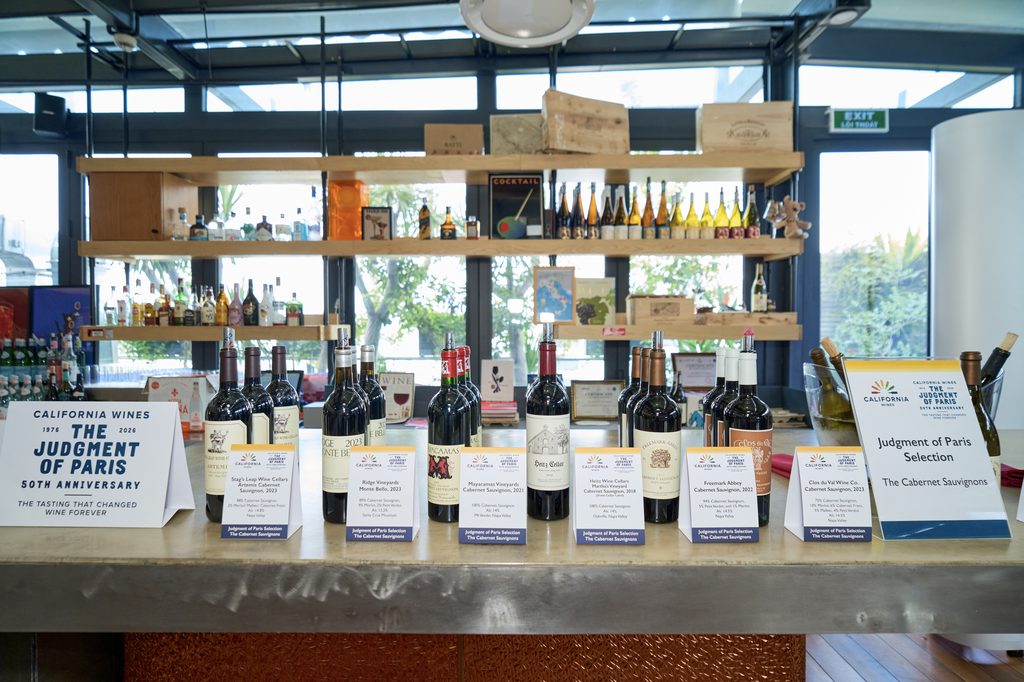
Fifty years later, the story was revisited at the Judgment of Paris anniversary celebration in Ho Chi Minh City. One of the most memorable experiences for me was the opportunity to taste California wines associated with this historic event, almost as if I were stepping into the shoes of the judges who sat around the tasting table in 1976.
Looking at the history alongside Vietnam’s wine market today, I believe California wines still have considerable room to grow. Although Vietnamese consumers are already familiar with wines from France, Italy, Chile and Australia, wine currently accounts for only around 1% of total alcoholic beverage consumption in Vietnam. This suggests that the market still has significant room for growth, creating an opportunity for California to establish a stronger presence.
The diversity of grape varieties, winemaking styles, quality levels and regional stories gives California an advantage in connecting with a new generation of Vietnamese wine consumers.
For me, the greatest lesson of the Judgment of Paris is that we should never allow established reputations or preconceived ideas to define the limits of what is possible. In 1976, California dared to step out of the shadow of traditional wine regions and prove its worth.
And perhaps, fifty years from now, a similar journey will unfold in Vietnam, where California wines have the opportunity to win over a new generation of wine lovers through their quality, identity and stories.